For Polish firearms enthusiasts, the Czech Republic has long been an interesting example of a liberal approach to firearms regulations. And starting from 1 January 2026, the Czech system will undergo a fundamental digital transformation aimed at making life even easier for legal firearm owners. The core of the new regulations is the transfer of verification and documentation to digital systems.
The digital era: The end of paper licences
The most revolutionary change is the immediate invalidation of all physical documents such as the zbrojní průkaz (firearms licence) or průkaz zbraní (firearm registration certificate). The new official term for the licence is zbrojní oprávnění (firearm possession authorisation), commonly referred to as the zbrojní pas (firearm passport).
So how do you prove your authorisation? An ID card (občanka) or another identity document is sufficient. The Czech police verify authorisations and registered firearms in the Central Firearms Register (Centrální registr zbraní – CRZ), a non-public central database. All queries to the CRZ are logged. The only exception that remains in physical form is the European Firearms Pass, which is necessary for travelling abroad.
Simplifications in trade and at the shooting range
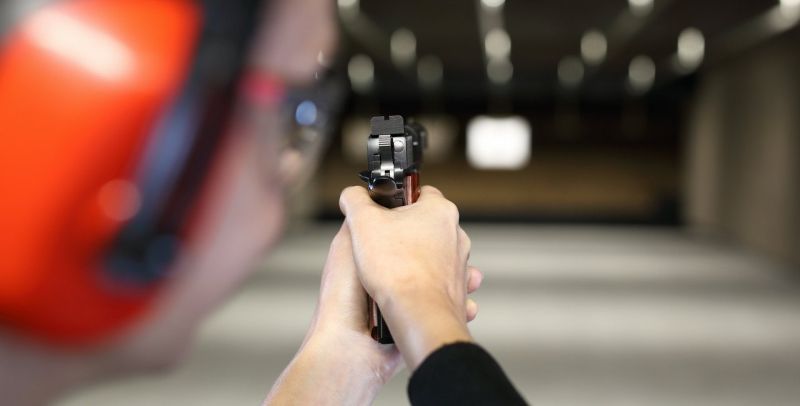
The new law brings major changes to the way authorisations are verified:
To sign the attendance book at a shooting range, it is enough to provide your first name, surname, ID card number, and the date and time of shooting. Shooting ranges are not required to check the validity of authorisations in the CRZ and do not act as police. What’s more, authorisation checks during hunting have been completely abolished.
The process of purchasing a firearm from licensed dealers will be maximally simplified – showing an ID card is enough, and the dealer will verify the buyer’s status in the CRZ.
In the case of buying/selling firearms between private individuals, verification requires presenting an ID card and a Zbrojní list – a verified printout from the information system containing a list of all authorisations and registered firearms. Because it does not include a photo, an ID card is necessary to confirm identity. The Zbrojní list can be generated independently as a PDF through the Portál občana (Citizen’s Portal), and eventually also through the Ministry of the Interior’s portal. Importantly, the list can be generated in full or partial form, so you don’t have to disclose your entire arsenal during a transaction.
Administrative revolution and new types of holders
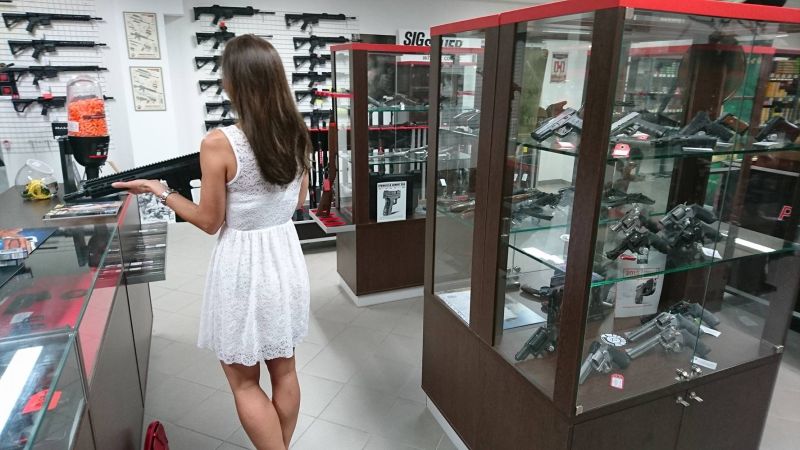
The regulations also bring administrative simplifications:
An application, registration, or notification can be submitted at any Czech Police firearms office, regardless of place of residence. No more regional restrictions or being tied to one police station.
In the case of private sales, the buyer and seller can go to the police together, where they will be identified, their authorisations confirmed, and firearm ownership will be transferred immediately.
A new concept of firearm holders: The terms main holder (hlavní držitel) and secondary holder (vedlejší držitel) have been introduced. The main holder may request the police to assign one or more secondary holders to a registered firearm, who must of course have the appropriate authorisation (zbroják). It should be noted that if the main authorisation expires, the secondary holder’s authorisation also becomes invalid.
Licences, categories of authorisations, and medical exams
The changes also affect the structure of authorisations:
The existing five categories of authorisations (zbrojních oprávnění) are being reduced to just two: General (covering the Czech firearm licence categories A – collectors, and B – sport shooting) and Extended (covering all others – C – hunting, D – security of persons and property, and E – personal protection). Current licence holders will automatically be transferred to the highest category they currently hold. For example, holding category E (personal protection) automatically transfers the holder to the Extended level, granting them the rights of group D (professional use).
The firearm licence is issued for an indefinite period, whereas under previous regulations each licence was issued for 10 years. Although the indefinite licence is introduced, the requirement for physical inspection remains: the firearm must still be physically presented to the police for registration and at least once every 10 years for inspection.
The obligation to submit a medical fitness certificate remains and must be fulfilled every 5 years. The system will automatically send notifications about upcoming deadlines.
New categories of firearms and ammunition
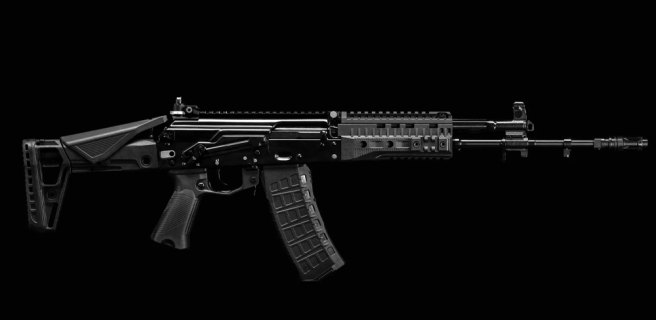
The old A, B, C and D categories are becoming a thing of the past. The new division includes, among others, R1–R4, PO and NO:
R1 – corresponds to the previous category A and includes generally prohibited firearms, e.g., fully automatic weapons.
R2 – corresponds to A-1, i.e., military firearms converted to civilian ones.
R3 – corresponds to category B, i.e., civilian firearms, requiring a zbroják and a nákupko (purchase permit).
R4 – corresponds to category C – this category requires only a firearm possession authorisation (zbroják). Interestingly, this category includes suppressors.
PO – corresponds to C-1, requiring only a notification of possession – signal, alarm, and salute weapons, etc.
NO – not subject to regulation, e.g., airsoft, paintball, airguns.
Ammunition categories:
S1 – prohibited ammunition, similar to Poland – incendiary, explosive, armour-piercing, etc.
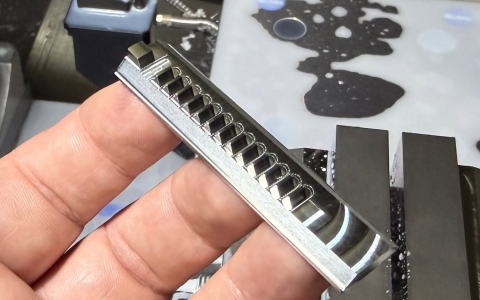
S2 – includes ammunition with controlled deformation (likely mushrooming ammunition) and newly included high-capacity magazines. Both require a zbroják and a single shared permit.
S3 – standard firearm ammunition.
S4 – ammunition not subject to regulation, e.g., signal ammunition.
Qualification exams: More questions, less disassembly
Future firearm holders must prepare for more rigorous exams, especially in the theoretical and shooting parts:
The Theoretical Part: The number of test questions in the database increases from just under 500 to nearly 850. The test itself will consist of 30 questions, including 17 on legal regulations, 5 on firearm and ammunition design, 5 on safe handling, and 3 on medical requirements. The questions are multiple-choice with only one correct answer. Strict error limits have been introduced – a maximum of 4 errors for the General authorisation; a maximum of 2 errors for the Extended authorisation. Of course, a free app with the question database is already available to help candidates prepare.
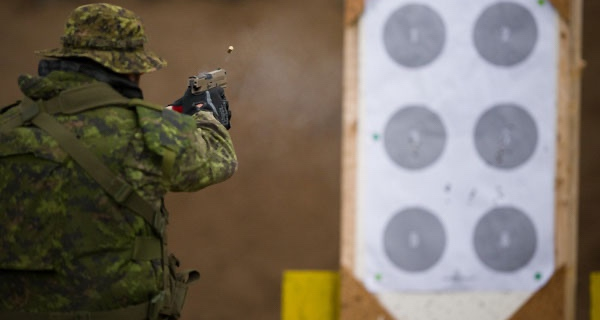
The Practical Part: Shooting is performed with both short and long rifled firearms (repeating or semi-automatic). The regulations do not specify details of the firearms – mechanical sights, red dot sights, or optical scopes may be used. The shooting range where the exam is held must publish information on the firearms used at least 14 days beforehand. Candidates must fire 5 shots with a short firearm at 10 m and 5 shots with a long firearm at 25 m. A total of 6 hits is required for the General authorisation, and 8 for the Extended one.
Although the requirement to fully disassemble and reassemble the firearm has been removed, candidates must still prepare the firearm for partial disassembly and reassembly. Moreover, the candidate must verbally explain how and why the firearm is cleaned. This oral section, though meant to be simple and not require “reciting poetry”, largely depends on the examiner’s interpretation.
If the exam is failed, appeals are resolved immediately on site under police supervision.
Firearms in the trunk and an amnesty
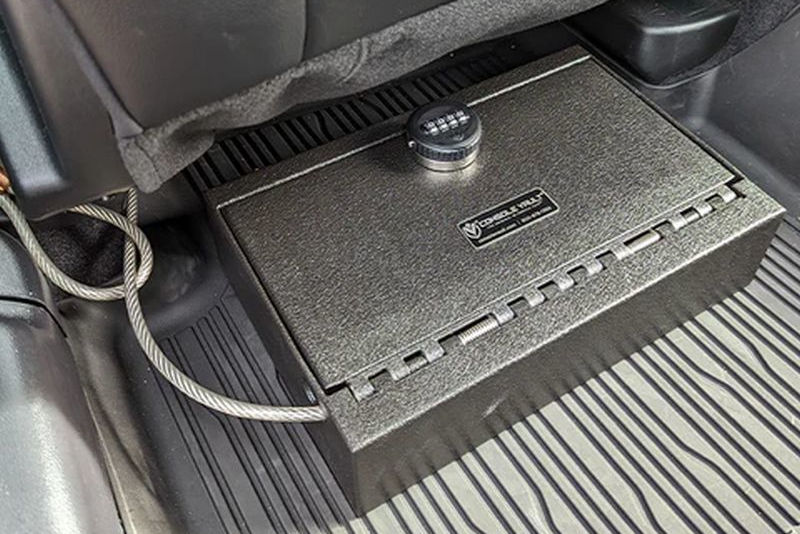
Finally, two very practical new measures:
A possibility has been introduced for short-term firearm storage in a car for up to 4 hours. The method of storage must meet strict conditions: the firearm must be placed in a lockable trunk or compartment attached to the vehicle’s body so that it cannot be removed without tools. The firearm must be unloaded, and ammunition stored separately.
From 1 January to 30 June 2026, an amnesty will allow the surrender and legalisation of illegal firearms (provided they were not used in a crime) without giving a reason. The amnesty also covers ammunition and explosives. For the latter, a special phone number must be called, and the police will safely collect and dispose of the hazardous materials.
The Czech reform, although requiring the learning of many new acronyms and procedures, aims to significantly simplify the management of legally owned firearms. Moving from paper files and documents to identity verification using just one ID card is comparable to Poland’s digitalisation of driving licences or vehicle registration – a single ID is enough for the police to immediately check all authorisations in the system. With this reform, the Czechs demonstrate that existing regulations do not have to and should not stand in the way of positive change. Regulations can be changed comprehensively rather than with mere cosmetic adjustments.
Is there a chance for similar changes in Poland? It is worth noting that the process would be easier for us, as we already have a digital platform integrated with the mObywatel app, and all ID cards issued since 2021 contain a digital layer and can be used for digital identity verification (for example with a phone equipped with an NFC reader).
Source: YT