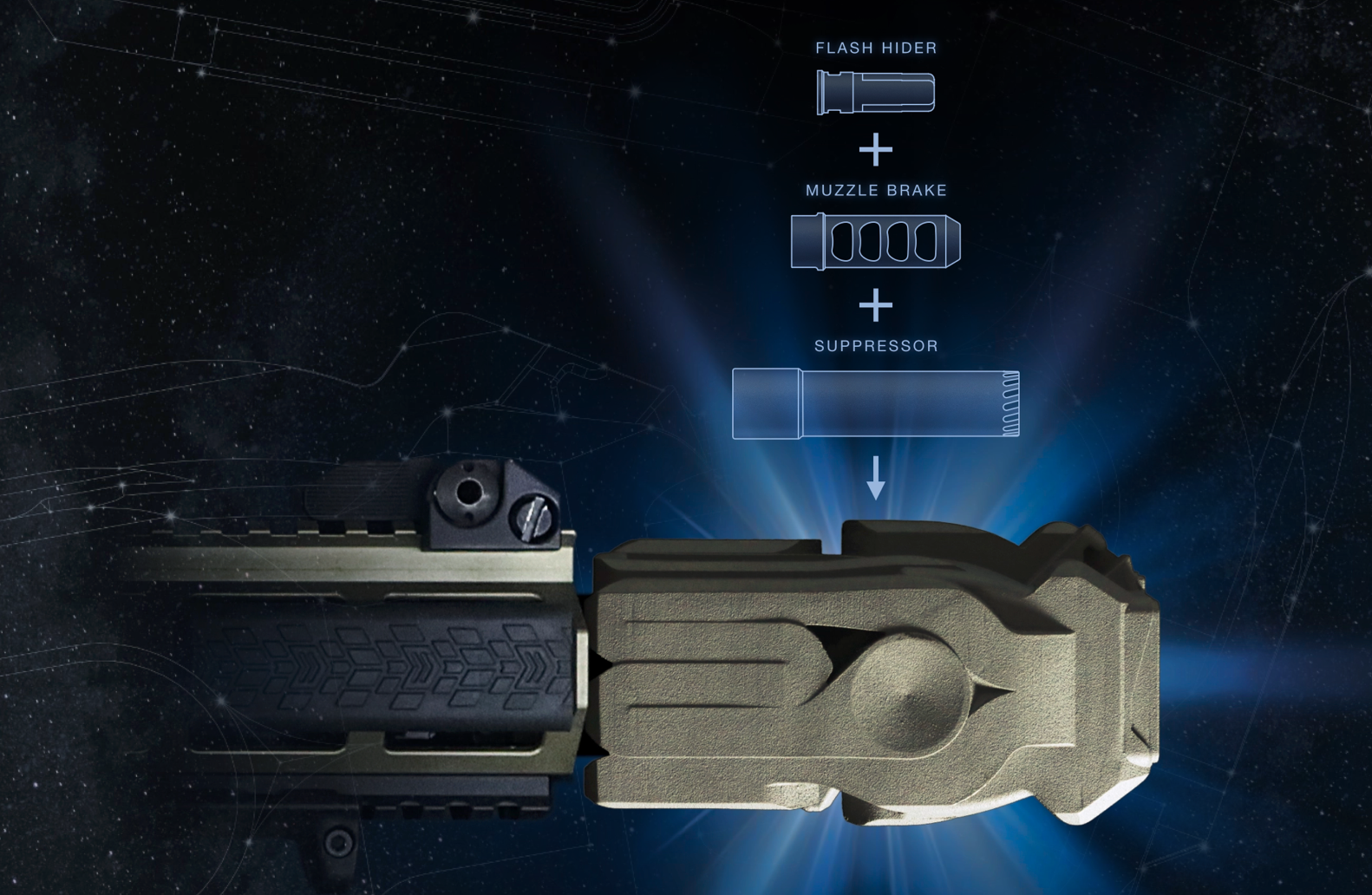

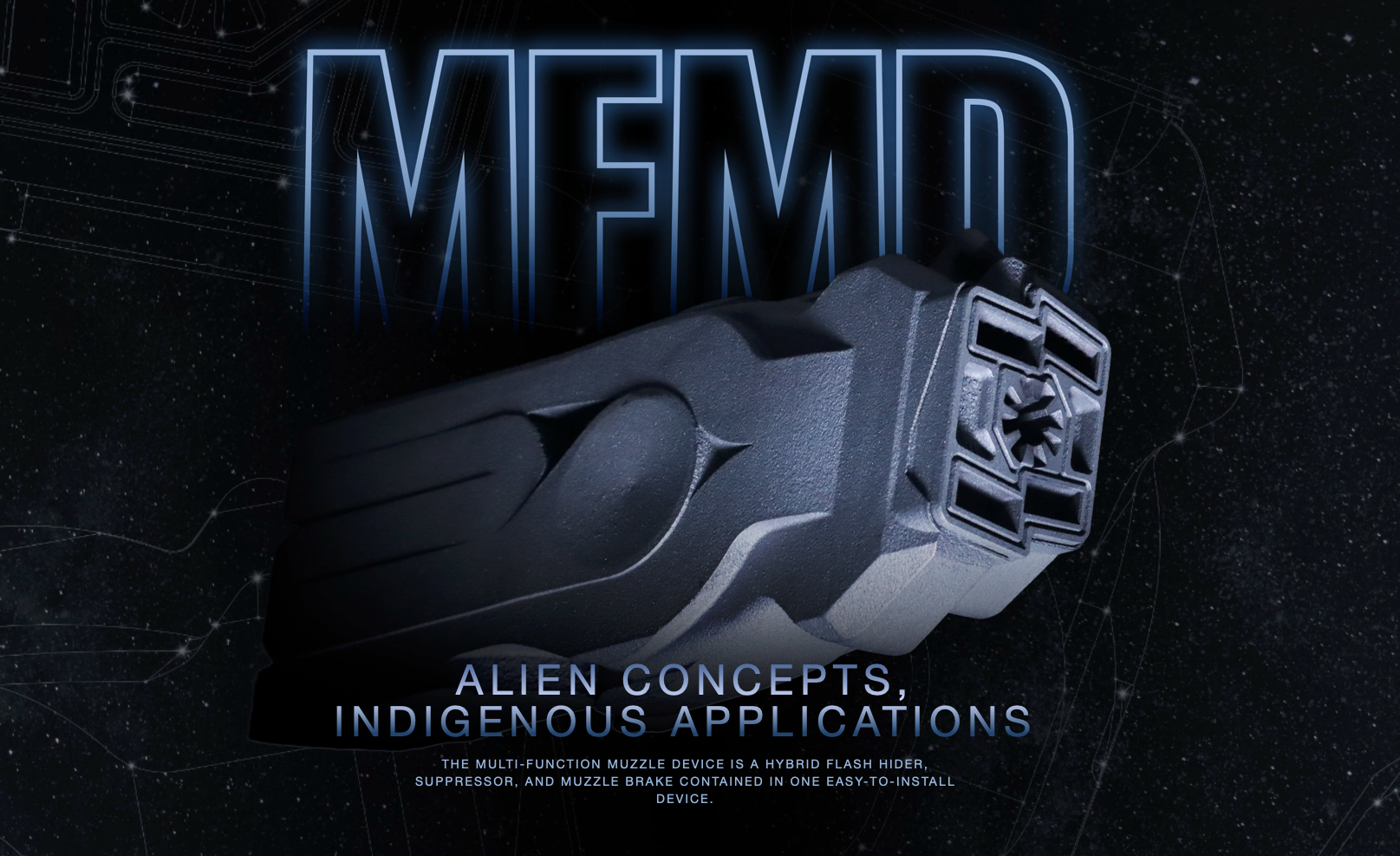
For decades, the development of firearm suppressors followed a similar concept: capture the gases generated by firing, allow them to expand inside the device, and reduce their impact on the surrounding environment. Strategic Sciences decided to approach the problem from a different angle. Its Multi-Function Muzzle Device (MFMD) is a design that clearly departs from the traditional suppressor form factor and employs an unconventional gas flow management architecture. The project immediately stands out thanks to its appearance. Rather than resembling the typical metal tube mounted at the muzzle, the MFMD looks more like an advanced science-fiction movie prop. Behind its unusual appearance lies years of development, with origins tracing back to the U.S. special operations community.
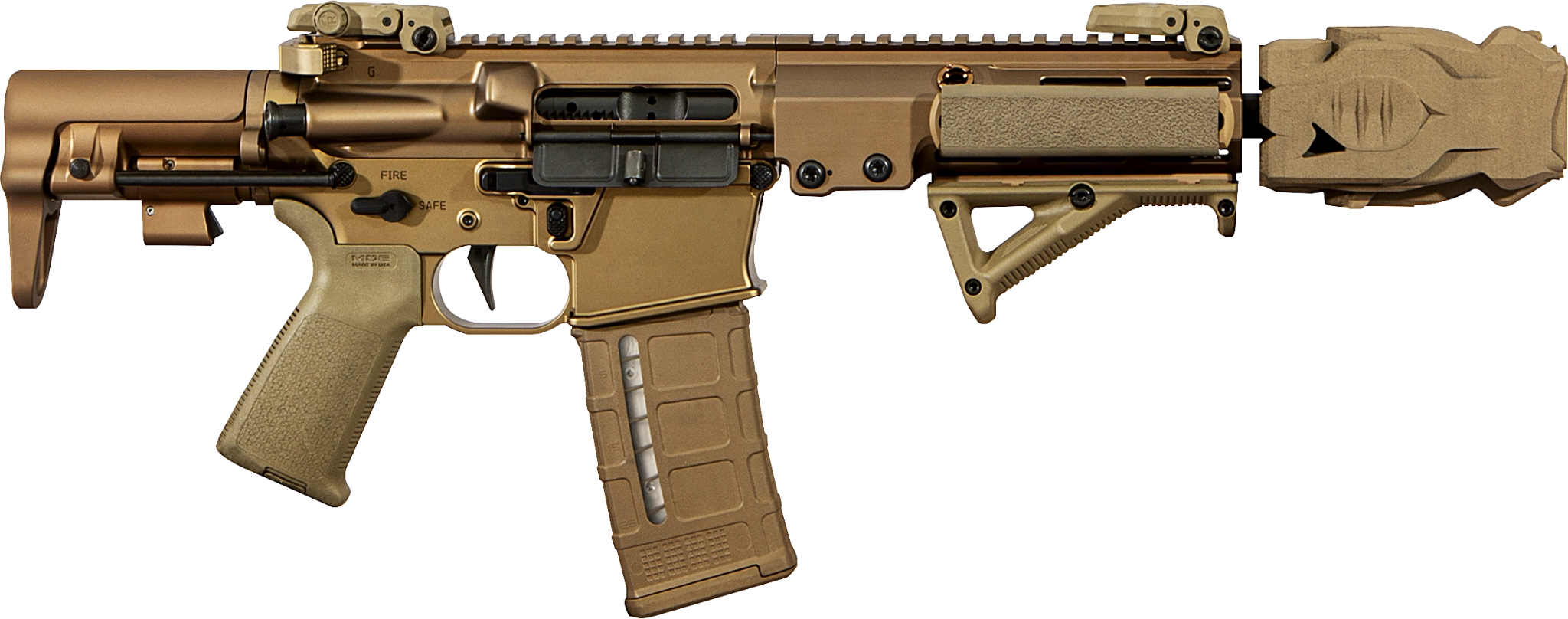
The project was created by Russ Oliver, a former U.S. Army Special Forces soldier who served as an 18B Weapons Sergeant. He began working on an alternative suppressor design around 2007. His question was simple: why do modern suppressors still rely on conventional baffle designs whose fundamental principles date back to Hiram Maxim's inventions from the early 20th century? According to the former Special Forces soldier, while such solutions effectively reduced sound, they often did so at the cost of increased back pressure and a greater amount of gas being directed back toward the shooter.
The development of an alternative to the conventional suppressor concept ultimately led to the creation of Operators Suppressor Systems (OSS), a company focused on suppressor designs without traditional baffles. A patent granted in 2012 covering gas flow management, together with the experience gained during the development of baffleless suppressors, became the foundation for the MFMD project.
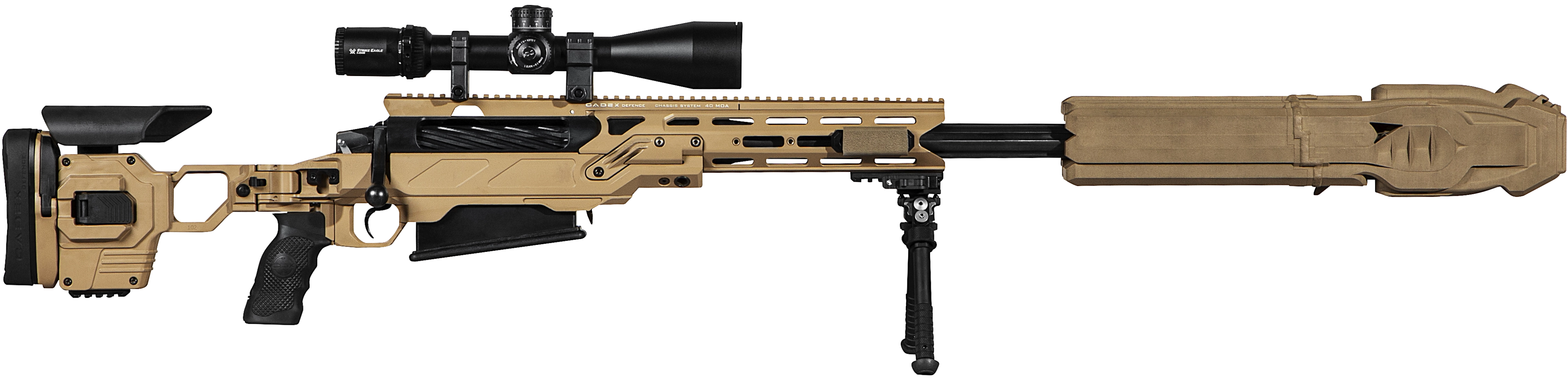
The direct catalyst for its development came from requirements published in March 2022 by the Irregular Warfare Technical Support Directorate (IWTSD), which called for an integrated muzzle device capable of simultaneously reducing muzzle flash, mitigating recoil, and lowering the acoustic signature while having minimal impact on the firearm's overall length, weight, and operation. The first phase of the program focused on validating the technology across multiple weapon platforms. Test configurations were developed for firearms chambered in .338 Lapua Magnum, 7.62 NATO, 5.56 NATO, and .300 Blackout, among others. Following successful results during the first phase, the program entered its second phase in January 2024, expanding the technology to a significantly larger number of platforms. According to Strategic Sciences, by the completion of Phase Two, more than 40 different configurations had been developed for 11 calibers. The technology was first publicly demonstrated at events including SHOT Show 2023. Today, however, the MFMD is no longer merely a prototype or demonstration device.
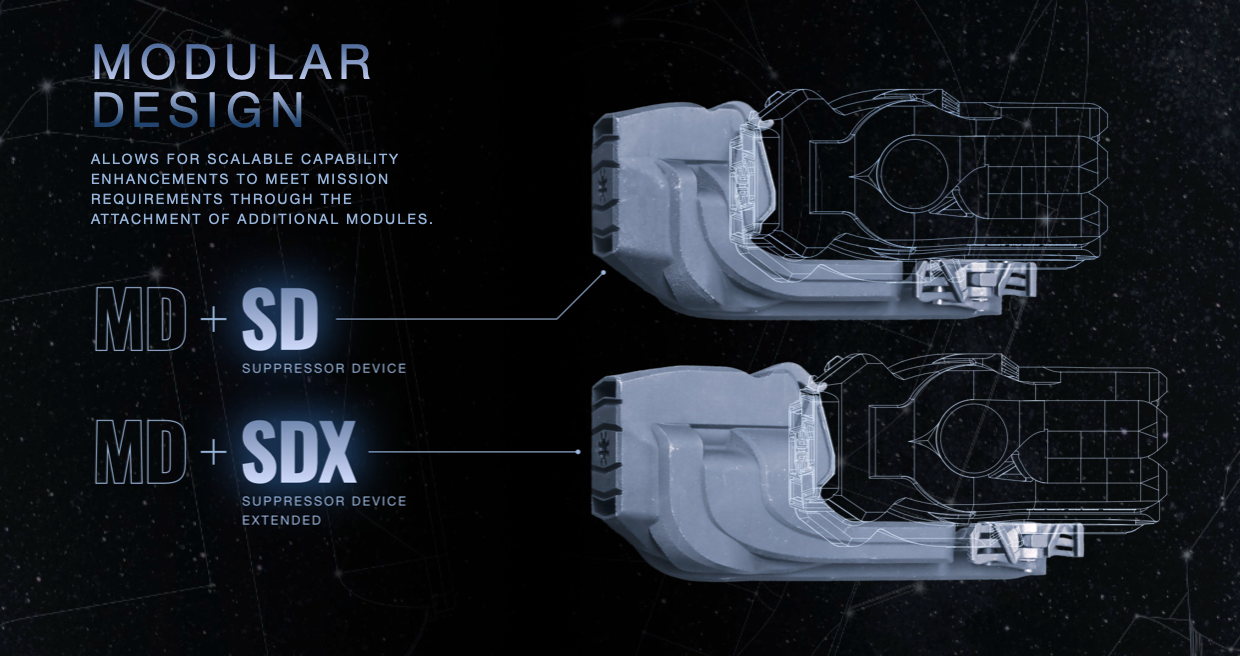
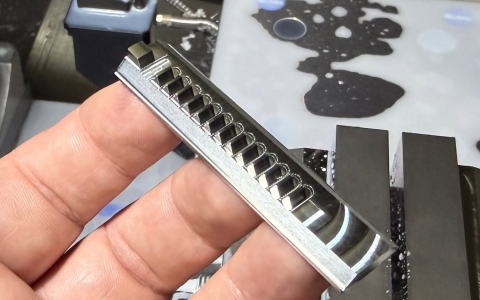
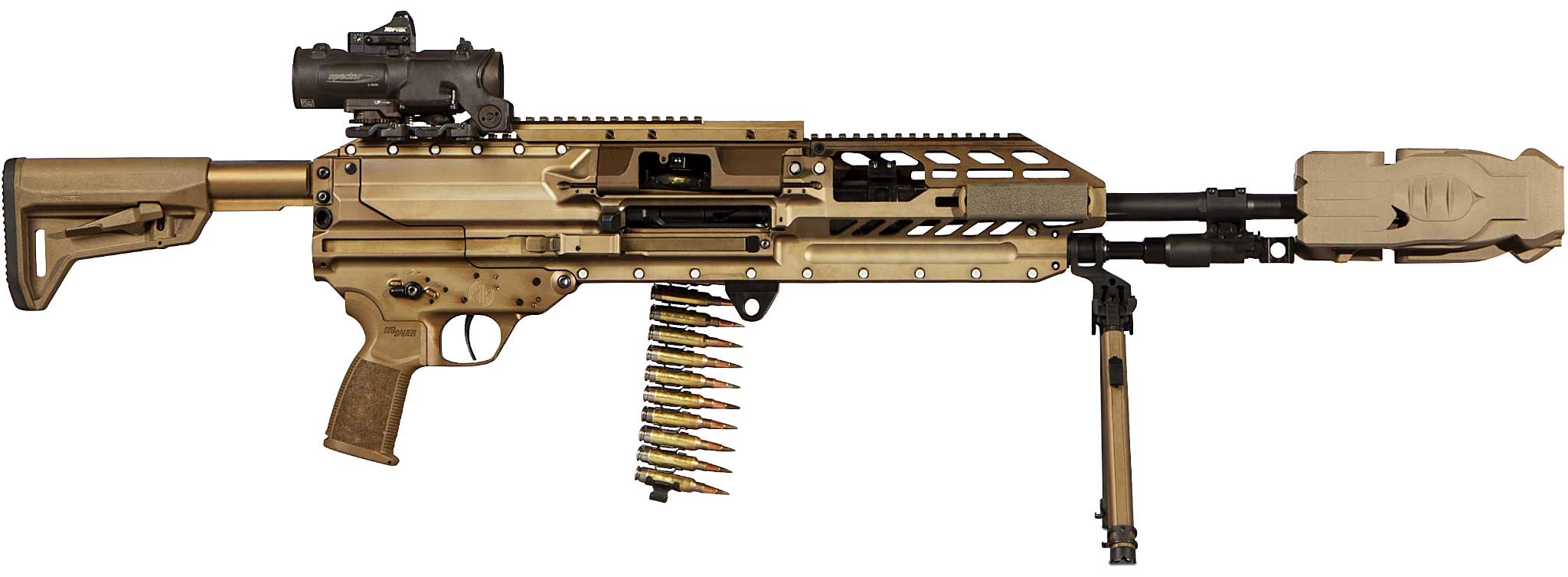
The MFMD utilizes four internal gas channels responsible for directing gas flow, dissipating energy, and controlling gas movement. According to the manufacturer, these channels create a gas path exceeding 3 meters, despite the module itself measuring only about 11.9 cm in length. This allows the gases to cool and slow down gradually without being brought to an abrupt stop. The system is built around the Muzzle Device (MD) module, which is mounted directly to the barrel and can function independently as a standalone muzzle device. It can be paired with the Suppressor Device (SD), providing a basic level of sound suppression while maintaining compact dimensions, or with the Suppressor Device Extended (SDX), which offers greater signature reduction thanks to its increased internal volume. One of the most distinctive features of the MFMD is its Over-The-Barrel (OTB) configuration, in which part of the suppressor extends rearward over the barrel. The device mounts via an integral 1/2x28 threaded interface, with approximately 3.3 cm of the assembly overlapping the barrel, reducing the system's overall added length.
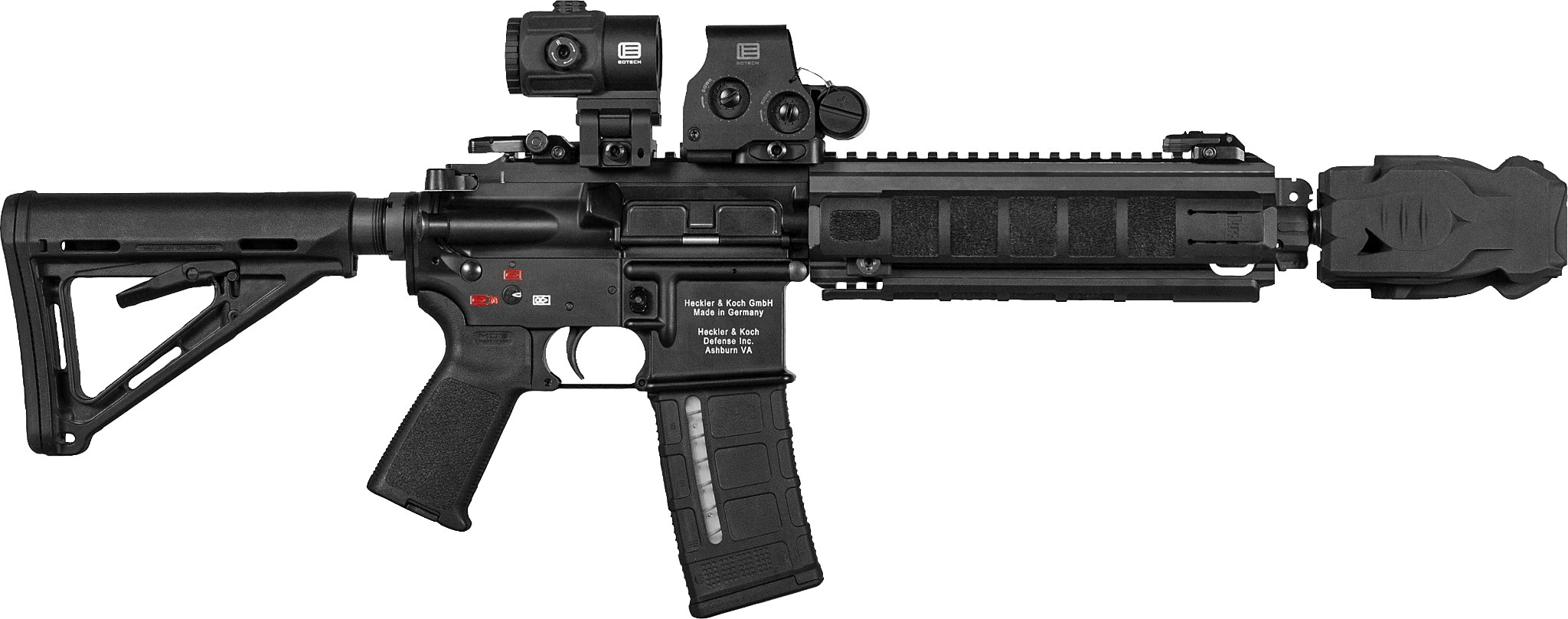
However, the modular design and OTB configuration come with certain trade-offs. For example, the MFMD-5.56-1.3-MDSDX-1/2x28 variant chambered for 5.56 mm features an MD module measuring approximately 11.9 cm in length, 6.4 cm in height, and 4.1 cm in width, with a weight of approximately 440 g. When paired with the SDX module, the complete system grows to approximately 19 cm in length and about 8 cm in height, while its weight increases to approximately 750 g, making it noticeably heavier than the current market standard.
The MFMD is manufactured using metal 3D printing. According to available information, the design incorporates materials including Inconel 718, a nickel-based alloy known for its exceptional resistance to high temperatures. The external surface is protected with a Cerakote finish, improving resistance to corrosion, heat, and wear. Strategic Sciences claims the MFMD delivers up to 99% first-round flash reduction while reducing recoil by as much as 60%. The company also states that the system produces sound levels of less than 140 dB and supports a wide range of calibers. To date, the MFMD has been integrated with 68 firearm platforms across 13 calibers, ranging from 5.56 mm to .50 BMG.
In 2026, the company announced the completion of the Government Inspection & Performance Verification phase, which included evaluation of both the system's performance and manufacturing capabilities. Following its successful completion, the product entered commercial production and became available for sale. The MFMD's price places it firmly in the premium segment of the market. The system is intended primarily for professional users and organizations requiring specialized equipment. It represents an alternative direction in the evolution of muzzle devices, combining the characteristics of a suppressor, compensator, and flash suppressor into a single system.
Photos: Strategic Sciences