
As a Fallout enthusiast, I had always wondered what the famous Gauss gun actually was. Imagine my surprise when I discovered that the coilgun was not an invention of Black Isle Studios, but a prototype ranged weapon concept that has existed for quite some time. However, the Gauss gun is gradually ceasing to be merely an experimental device — according to reports, as early as 2023, the PLA Naval University of Engineering in China revealed that it had been testing the world's most powerful coilgun. In 2026, China is presenting another Gauss gun prototype, this time in a form factor comparable to a handgun.
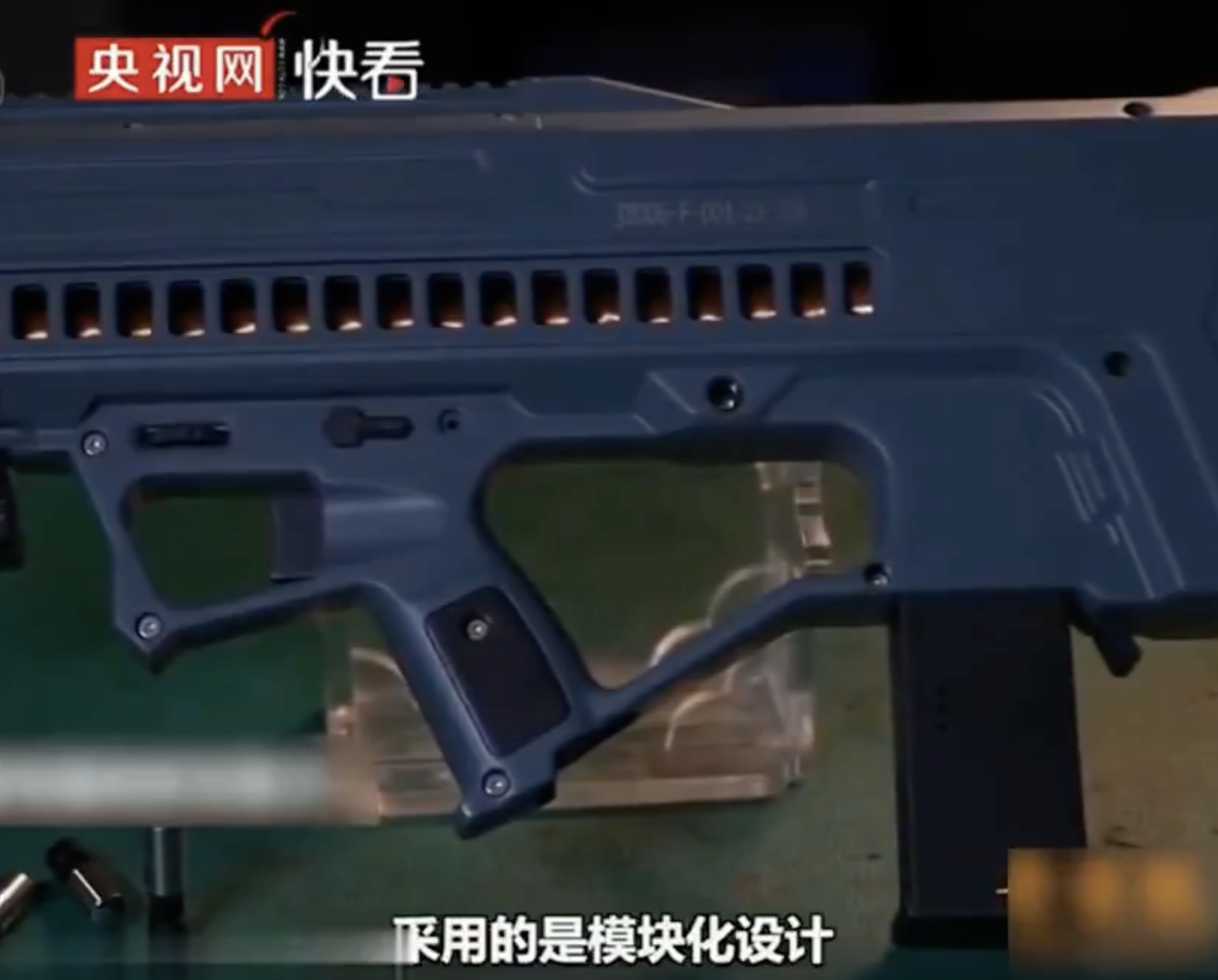
The newly unveiled model has higher kinetic energy than previous prototypes, according to information provided by CCTV (China's state television broadcaster). What makes it stand out is its intended purpose. The device is designed to be introduced as equipment for law enforcement and public security personnel. Due to its relatively low power, the weapon is intended for use in riot control, crowd management, and other situations where lethal force is not required. The new Gauss gun is not a rifle because it does not rely on gunpowder-based technology — there is no ignition or conventional firing process involved. Instead, the launcher functions by propelling "caps" using an electromagnet and, according to CCTV, is capable of firing approximately 1,000 to 2,000 such projectiles per minute.
The central structural component of this new electromagnetic weapon is an air-core copper-wire coil, also known as a solenoid. The entire system is powered by batteries. Electrical current flowing through the coil generates an electromagnetic field that accelerates and launches a ferromagnetic projectile. The Chinese-made weapon features a 12-inch barrel (30 cm) along which approximately 20 copper coils are arranged in sequence. When energized, these coils create electromagnetic fields that propel the projectile through and out of the barrel. The weapon is light enough to be operated with one hand. The Chinese model also includes a laser sight. The grip is positioned in the middle section, while the magazine is located at the rear of the weapon. It is equipped with an electronic display that informs the shooter about the battery charge level, ammunition count, and current firing mode. This allows the operator to adjust the electrical voltage, which directly affects the projectile's velocity and, consequently, its stopping power.

In this way, the weapon could potentially be used in the future both during armed conflicts and in situations where eliminating a target is not necessary. Such a weapon is also significantly quieter than conventional firearms — it produces no smoke or muzzle flash when fired and leaves no cartridge cases behind, making it potentially useful in certain specialized operational scenarios.
The coilgun remains an experimental technology, but this example demonstrates how the development of electromagnetic weapons and related technologies is gradually moving closer to concepts long associated with cyberpunk visions of the future. Its biggest limitation is the projectile's muzzle velocity of just 86 m/s. Such a speed is more comparable to that of a projectile fired from a low-powered airsoft replica than from a firearm — for comparison, the muzzle velocity of a projectile fired from an AK-47 is approximately 715 m/s. The projectile fired by the described Gauss gun is capable of penetrating wooden boards at a distance of several meters, but its performance drops significantly at longer ranges. Nevertheless, the technology is clearly continuing to evolve, and in this context, the future appears quite intriguing.
Sources:
Global Times
CCTV News
South China Morning Post