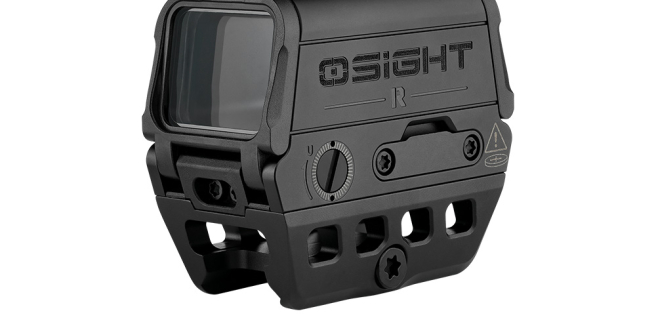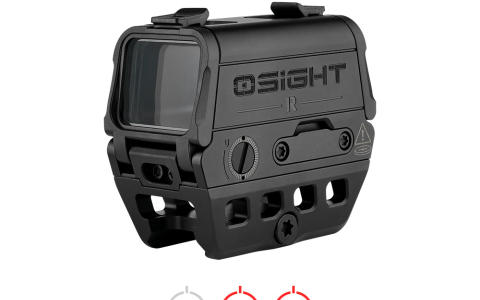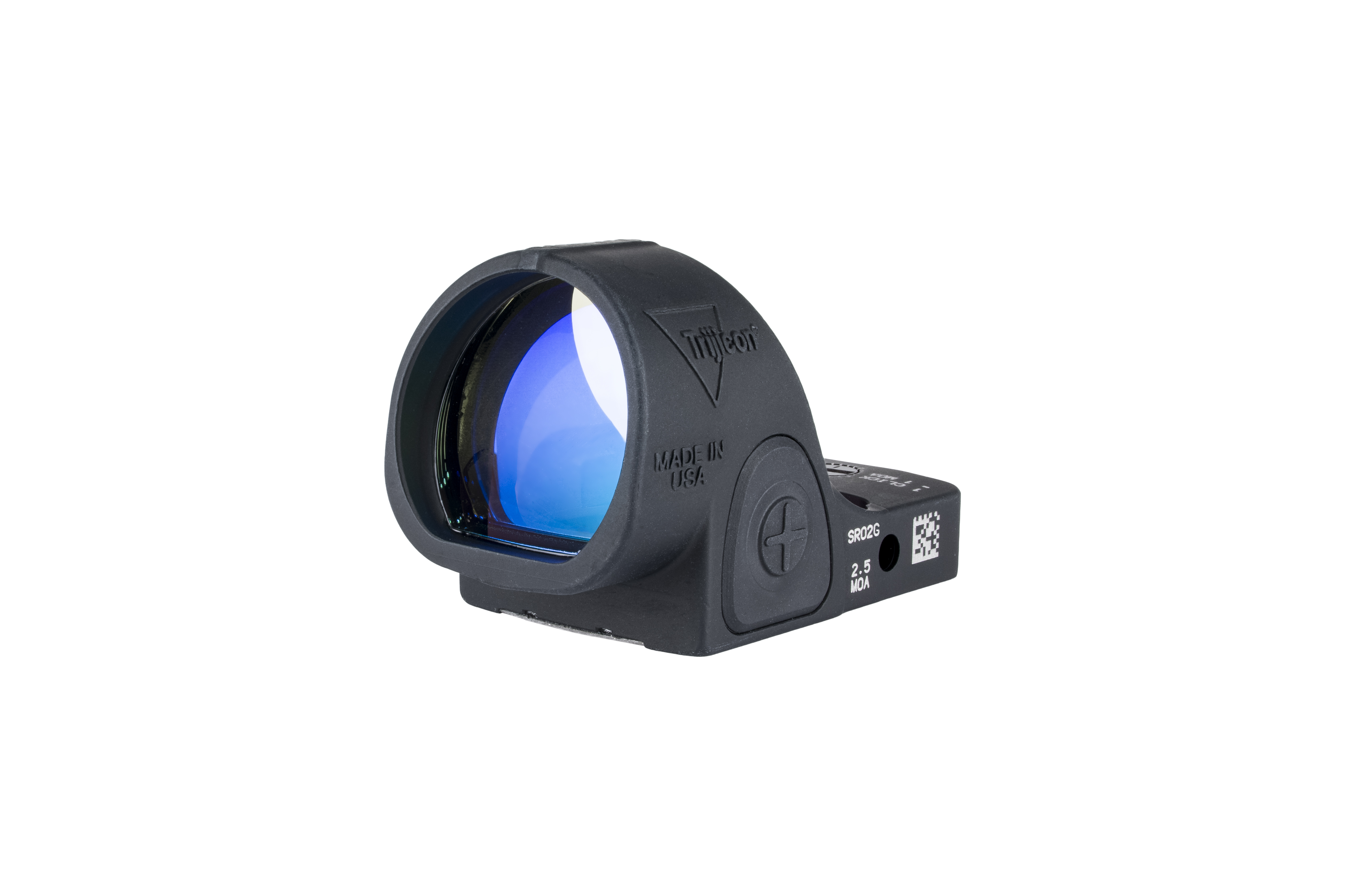

Trijicon has expanded the SRO family of red dot sights with a new variant featuring a 2.5 MOA green aiming dot. The new model retains the design, controls and most of the key specifications of the existing SRO models.
The SRO, or Specialized Reflex Optic, is not a new design. Trijicon introduced the family in 2019 as a sight developed primarily for mounting on pistols and use in competitive and target shooting. One of the most distinctive features of the SRO is its large, rounded window, which is designed to make it easier to acquire the dot quickly and track it as the firearm moves and recoils. Until now, the SRO has been available with red dots in 1, 2.5 and 5 MOA sizes. According to Trijicon, the 2.5 MOA dot is the most popular size in the SRO family. The new variant introduces a green aiming dot to the SRO family for the first time.
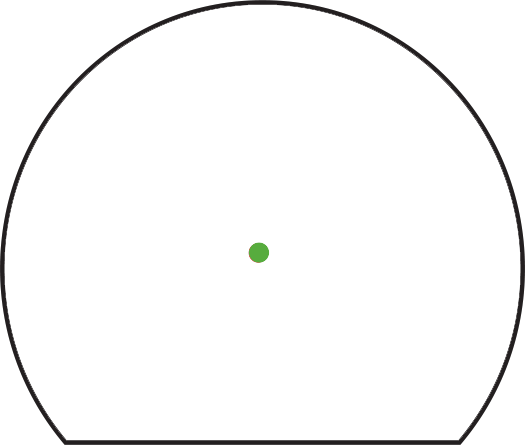
Simply changing the dot color from red to green is, of course, not a major design revolution. Trijicon argues, however, that the human eye is highly sensitive to the green portion of the visible spectrum, meaning that a green dot may appear bright and easy to pick up even at lower brightness settings. According to the manufacturer, this can be beneficial when using the sight in daylight, with a hazy sight picture or against a complex background. The company also points to the potential for reducing eye strain during extended use.
The SRO Green Dot offers 1× magnification and uses LED illumination. The user can leave brightness selection to the automatic system or choose from eight manually selectable levels. Two are intended for use with night vision, while the remaining six are designed for conventional use. The control system is supplemented by Lock-Out and Lock-In modes. The former prevents manual brightness adjustment and leaves the setting to the sight's automatic system, reducing the risk of accidentally changing the brightness level. In Lock-In mode, the user selects a specific brightness level and can then lock it, disabling both automatic adjustment and the possibility of accidentally changing the setting with the buttons. Trijicon presents this feature primarily as a solution for competitive and target shooting, where maintaining a consistent dot brightness may be important.
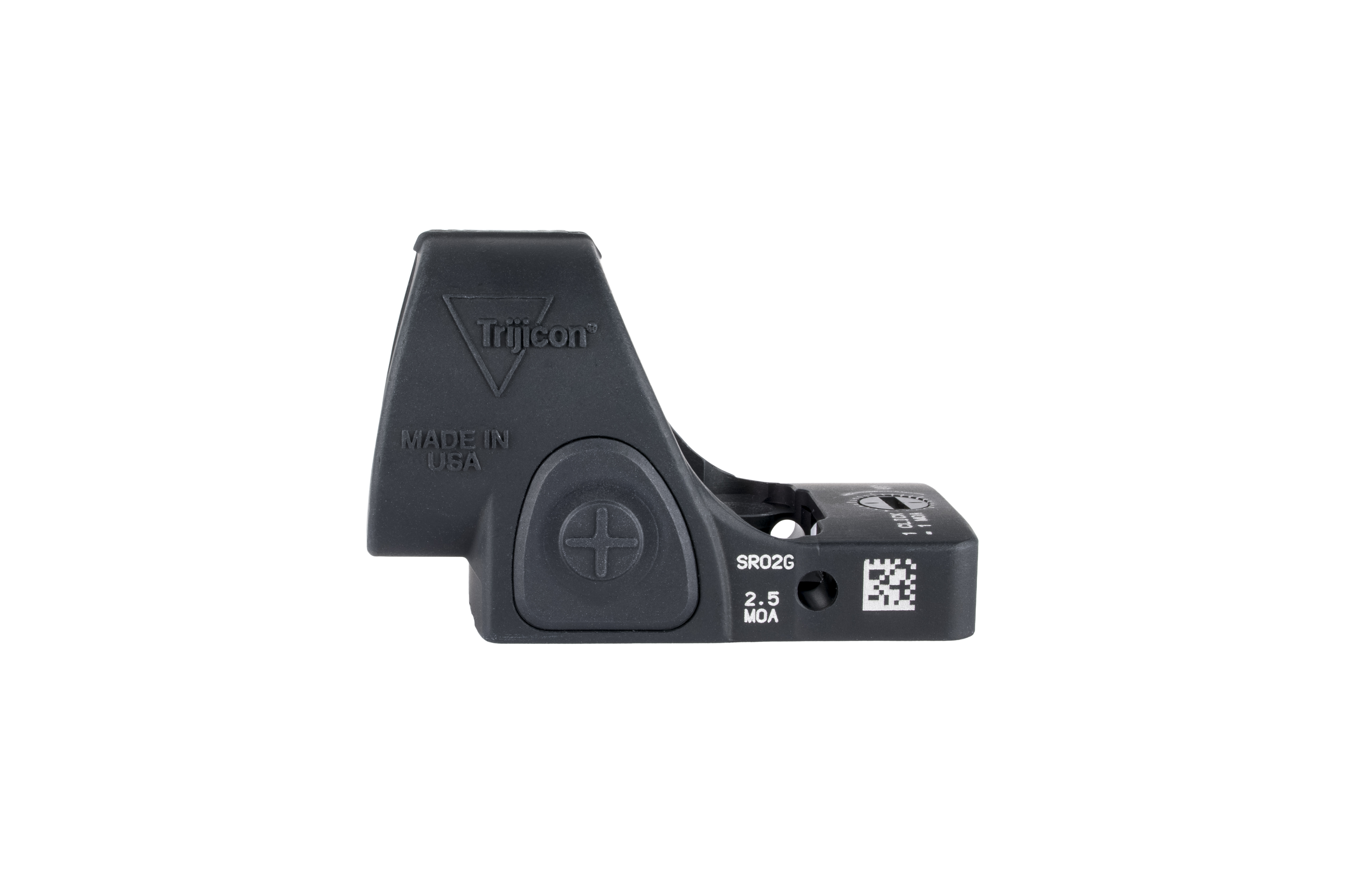
Power is supplied by a single CR2032 battery. The battery compartment is located on the top of the housing, so the battery can be replaced without removing the sight from the firearm. For the new green-dot variant, the manufacturer claims two years of continuous battery life at a temperature of 21°C with the brightness set to 4 out of 8. The housing is made of forged 7075-T6 aluminum, and the manufacturer states that the design is intended for direct mounting on a pistol's reciprocating slide and has been tested against typical drops involving a firearm equipped with the sight. The SRO's electronics are based on solutions similar to those used in the Trijicon RMR. The design also allows the use of suppressor-height iron sights, including on pistols equipped with a suppressor. Trijicon states that the SRO is submersible to a depth of approximately 3 meters. The SRO measures 55.88 mm in length, 33.02 mm in width and 35.56 mm in height. The sight weighs 45.36 g. Windage and elevation adjustments are made in 1 MOA per click increments. The total adjustment range is 150 MOA.
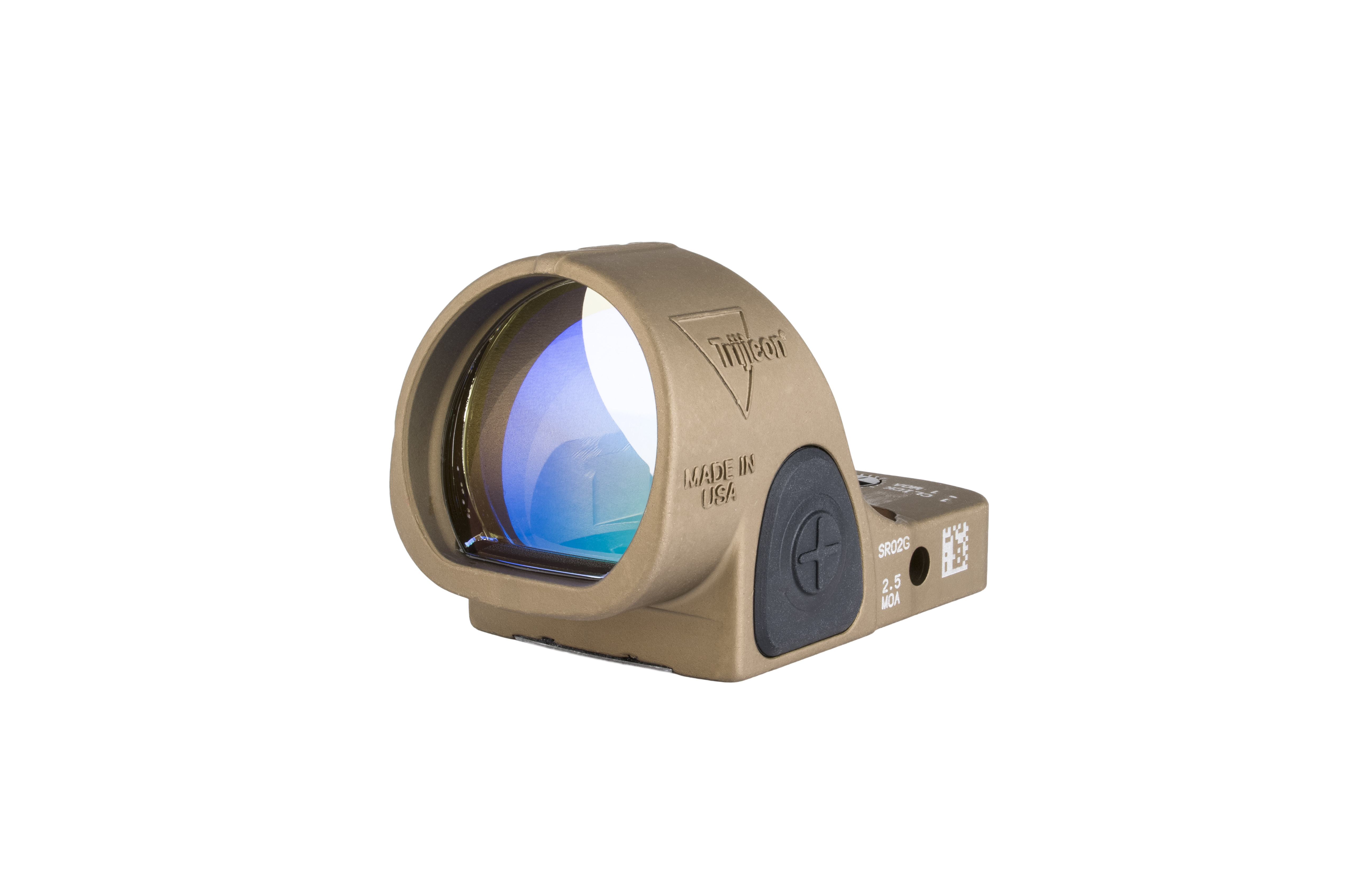
The SRO uses the same footprint as the Trijicon RMR, allowing it to be used with many slides and mounting plates designed for this standard. This does not, however, mean full compatibility with every pistol without additional components. Trijicon notes that Glock MOS pistols, Springfield pistols with the OSP system, Walther PDP pistols and H&K VP9 Optics Ready models require the SRO AC32085 mounting kit. The mount itself is not included with the sight. The package does include two lengths of Torx mounting screws, a Torx wrench, a tool for operating the battery cover, an instruction manual, a warranty card and a Trijicon sticker.
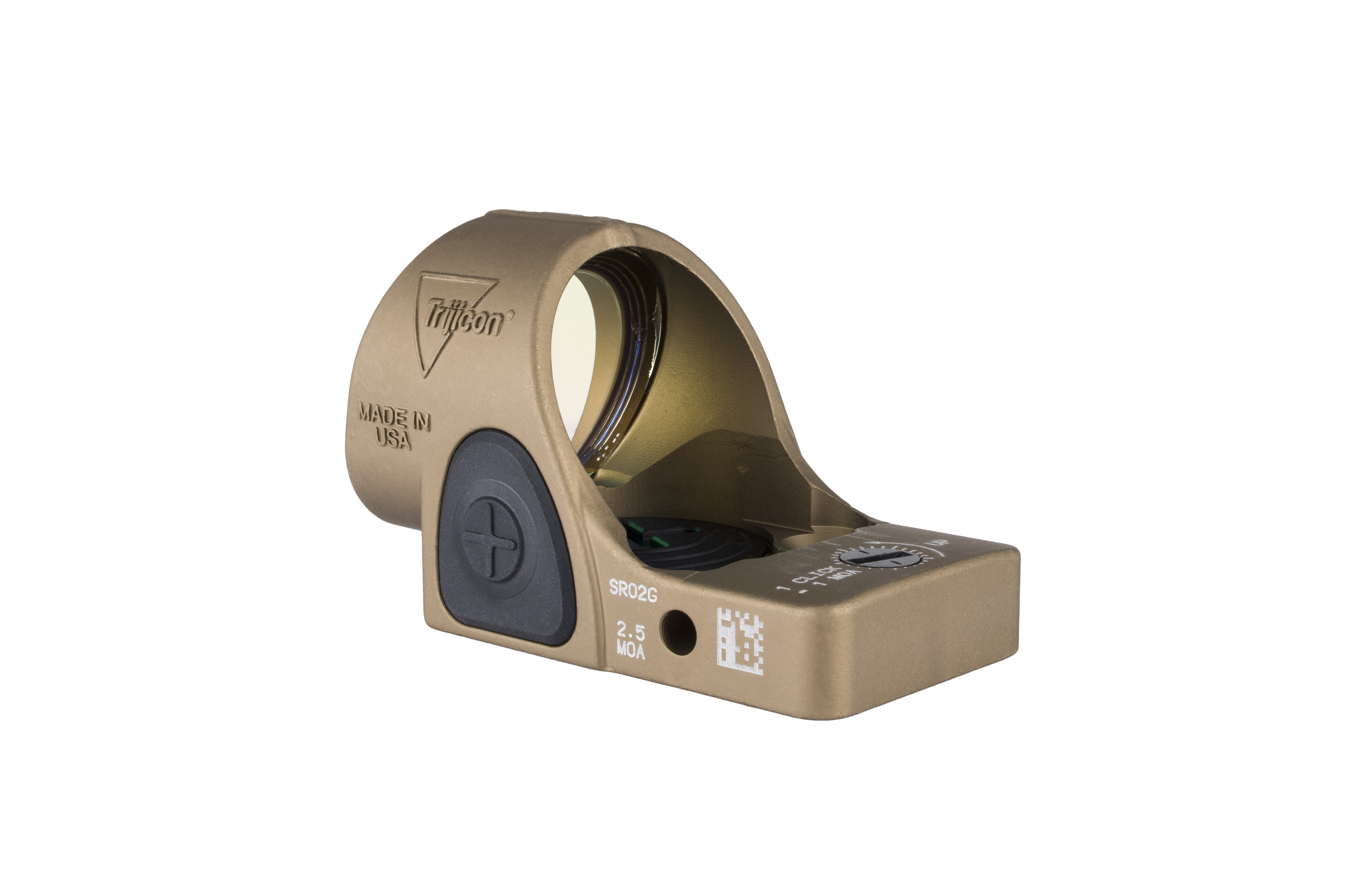
The new SRO Green Dot is currently available in two color options, Matte Black and Coyote Brown. For those already using an SRO, the most significant change is therefore not a new housing or electronics, but the introduction of an alternative to the red dot, which, according to Trijicon, users have been requesting for some time.
Photos: Trijicon