
Trwa ładowanie

Twoja przeglądarka jest przestarzała. Niektóre funkcjonalności mogą nie działać poprawnie. Zalecamy aktualizajcę lub zmianę przeglądarki na nowszą.

New weapon for the South Korean army

New weapon for the South Korean army

New weapon for the South Korean army

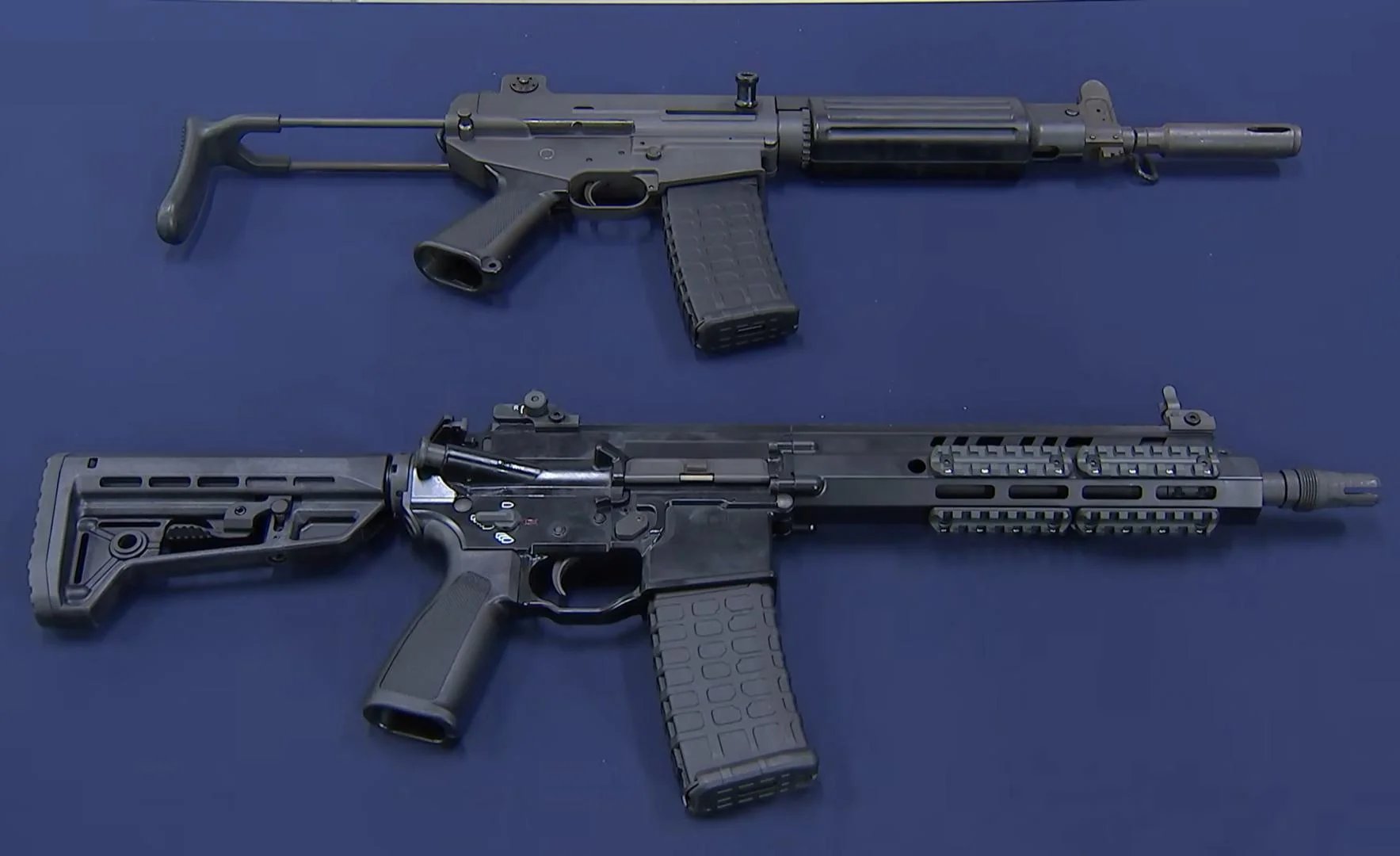
South Korean company SNT Motiv has begun deliveries of the new K17 submachine gun to the Republic of Korea Armed Forces. In this article, we will use the nomenclature adopted by the South Korean military, as technically the weapon is an automatic rifle chambered for the 5.56 × 45 mm NATO intermediate cartridge. The design is intended to replace the K1A , which has been in service since the early 1980s, and will initially be issued to special operations units. SNT Motiv is to supply the South Korean military with as many as 15,000 K17s.

The K1A has remained in service with the South Korean military for approximately 45 years. Developed by Daewoo Precision Industries, the weapon was used by personnel requiring a compact and effective firearm. The submachine gun found applications among vehicle crews, artillery personnel, medics and some command staff.

The weapon is intended to replace the K1A, which has been in service for more than 40 years, with approximately 15,000 units expected to be delivered to the military in total.

The K17 was selected as part of South Korea's Special Operations Submachine Gun Type 1 program. The design has already passed the required military trials and has been approved for adoption. One of the most significant changes compared to the K1A is the use of a different gas system, as the K17 employs a short-stroke gas piston. The design also incorporates features known from the AR family, including a charging handle and a forward assist. The submachine gun is chambered in 5.56 mm.

The weapon features a heavy, free-floating barrel manufactured using a forging process. The barrel is 1.5 inches, or approximately 4 cm, longer than that of the K1A. SNT Motiv states that the solutions used are intended to improve accuracy, reduce shot dispersion and increase durability during intensive use. The declared effective range of the K17 is 400 m, which is 100 m greater than that of the K1A. The weapon features four-sided Picatinny rails and an M-LOK interface. The K17 is equipped with a telescoping stock offering five-position adjustment. An ambidextrous control layout has also been incorporated, making the weapon easier to operate for both right- and left-handed shooters. The K17 also features a three-round burst firing mode.

The weapon is intended to replace the K1A, which has been in service for more than 40 years, with approximately 15,000 units expected to be delivered to the military in total.

SNT Motiv placed particular emphasis on the durability of the design. During the development of the K17, tests involving more than 100,000 rounds were conducted. The weapon was also tested at extremely low temperatures, reaching -51°C, as well as during intensive firing that caused the barrel to heat up significantly. The extensive firing trials also led to comparative testing against a foreign firearm. During a trial involving the HK416, a total of 60,000 rounds were fired, and according to SNT Motiv, the K17 completed the test without interruption. The manufacturer states that the tests conducted made it possible to increase the declared service life of the design by as much as 250 percent compared to the previous solution.

The weapon is intended to replace the K1A, which has been in service for more than 40 years, with approximately 15,000 units expected to be delivered to the military in total.

The manufacturer emphasizes that the development of the K17 drew on experience gained from producing earlier South Korean firearms, as well as solutions studied in modern weapons from foreign manufacturers such as SIG Sauer and Heckler & Koch. SNT Motiv has also sought to reduce the maintenance costs of the new weapon. By using many shared components, the K17 can make use of the existing technical infrastructure of the South Korean armed forces, which is expected to simplify maintenance and lower operating costs. Following the start of deliveries of the K17 to special operations units, the weapon is also expected to be issued to additional units that previously used the K1A. The first 1,500 examples are scheduled for delivery in 2026, while approximately 14,000 more units are planned for delivery in 2027. The exact weight, overall length and some other catalog specifications have not yet been disclosed.

South Korean company SNT Motiv has begun deliveries of the new K17 submachine gun to the Republic of Korea Armed Forces. The design is intended to replace the K1A, which has been in service since the early 1980s, and will initially be issued to special operations units. SNT Motiv is to supply the South Korean military with as many as 15,000 K17s. The K1A has remained in service with the South Korean military for approximately 45 years. Developed by Daewoo Precision Industries, the weapon was used by personnel requiring a compact and effective firearm. The submachine gun found applications among vehicle crews, artillery personnel, medics and some command staff. The K17 was selected as part of South Korea's Special Operations Submachine Gun Type 1 program. The design has already passed the required military trials and has been approved for adoption. One of the most significant changes compared to the K1A is the use of a different gas system, as the K17 employs a short-stroke gas piston. The design also incorporates features known from the AR family, including a charging handle and a forward assist. The submachine gun is chambered in 5.56 mm. The weapon features a heavy, free-floating barrel manufactured using a forging process. The barrel is 1.5 inches, or approximately 4 cm, longer than that of the K1A. SNT Motiv states that the solutions used are intended to improve accuracy, reduce shot dispersion and increase durability during intensive use. The declared effective range of the K17 is 400 m, which is 100 m greater than that of the K1A. The weapon features four-sided Picatinny rails and an M-LOK interface. The K17 is equipped with a telescoping stock offering five-position adjustment. An ambidextrous control layout has also been incorporated, making the weapon easier to operate for both right- and left-handed shooters. The K17 also features a three-round burst firing mode. SNT Motiv placed particular emphasis on the durability of the design. During the development of the K17, tests involving more than 100,000 rounds were conducted. The weapon was also tested at extremely low temperatures, reaching -51°C, as well as during intensive firing that caused the barrel to heat up significantly. The extensive firing trials also led to comparative testing against a foreign firearm. During a trial involving the HK416, a total of 60,000 rounds were fired, and according to SNT Motiv, the K17 completed the test without interruption. The manufacturer states that the tests conducted made it possible to increase the declared service life of the design by as much as 250 percent compared to the previous solution. The manufacturer emphasizes that the development of the K17 drew on experience gained from producing earlier South Korean firearms, as well as solutions studied in modern weapons from foreign manufacturers such as SIG Sauer and Heckler & Koch. SNT Motiv has also sought to reduce the maintenance costs of the new weapon. By using many shared components, the K17 can make use of the existing technical infrastructure of the South Korean armed forces, which is expected to simplify maintenance and lower operating costs. Following the start of deliveries of the K17 to special operations units, the weapon is also expected to be issued to additional units that previously used the K1A. The first 1,500 examples are scheduled for delivery in 2026, while approximately 14,000 more units are planned for delivery in 2027. The exact weight, overall length and some other catalog specifications have not yet been disclosed. SNT Motiv intends to use the experience gained during the development of the K17 and earlier designs in a future program to develop a new standard-issue rifle for the South Korean armed forces.

SNT Motiv intends to use the experience gained during the development of the K17 and earlier designs in a future program to develop a new standard-issue rifle for the South Korean armed forces.

Photos: KFN
Komentarze

NAJNOWSZE

Loading...
  • Platinium partner

    Gold partner

  • Silver partner

  • Tactical partner