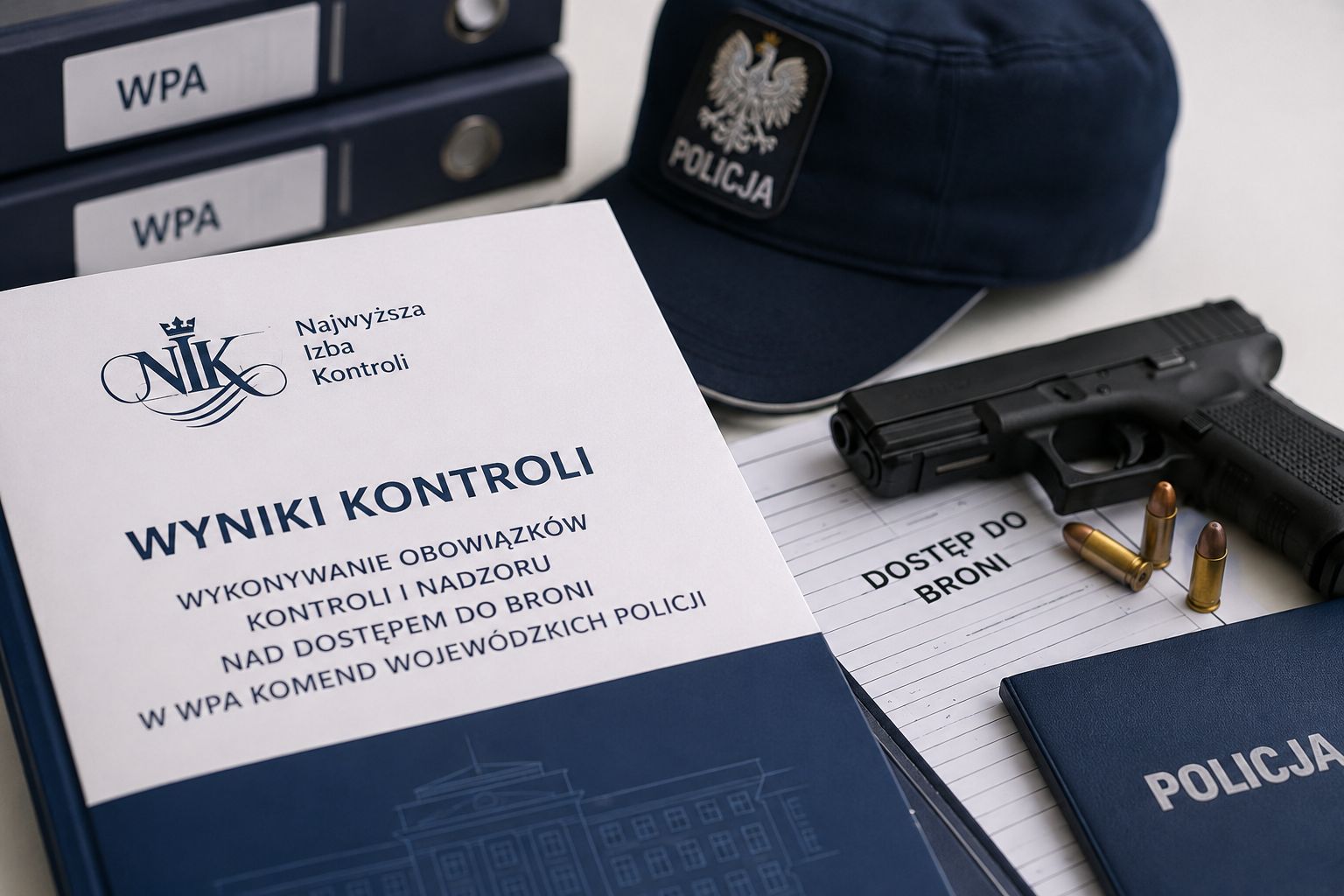

The Polish Supreme Audit Office (NIK) has published the results of a comprehensive review of Poland's firearms licensing and control system, conducted between 2022 and 2025. The primary reason for the audit was an unprecedented statistical surge: the number of firearms permits issued annually increased from 15,330 in 2020 to nearly 46,000 in 2024. This almost 200% increase, driven in part by geopolitical concerns following Russia's invasion of Ukraine, put significant pressure on the Administrative Proceedings Departments (WPA) and tested the effectiveness of oversight by the Ministry of the Interior and Administration.
Number of Firearms Permits Issued to Private Individuals in 2022–2024
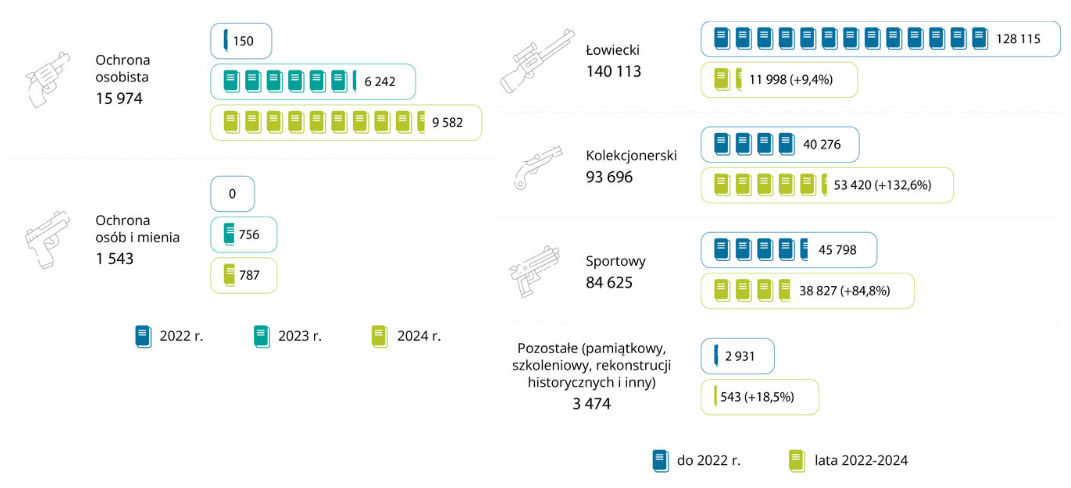 Source: NIK Report
For the shooting community, this report may have far-reaching implications. According to its authors, effective oversight of firearms licensing is intended to guarantee legal stability for firearms owners. Efficient procedures reduce administrative discretion and protect law-abiding citizens from the consequences of incidents involving individuals who should not possess firearms. While the Audit Office highlights numerous systemic deficiencies, its assessment of police authorities is not entirely negative—in many critical areas, the system demonstrates the level of diligence expected. In the shooting world, a reliable administrative process is the only safeguard against arbitrary decisions by WPA authorities. NIK confirmed that, in most of the audited units, proceedings were conducted in accordance with the law and that police authorities effectively identified risks within the scope of their competencies.
Key positive findings identified by the Audit Office:
– Police effectively exercised their right to challenge medical certificates in cases involving suspected addiction or domestic violence. The success rate of such appeals at the second-instance level ranged from 31.7% to 100%, effectively preventing dysfunctional individuals from gaining access to firearms.
– Poland implemented the provisions of the 2019 firearms licensing legislation in a timely and exemplary manner, ensuring full oversight of firearms and ammunition trade conducted by commercial entities.
– The National Police Commander actively identified emerging threats by establishing contact points for analyzing illegal arms trafficking and drawing attention to the growing role of black powder firearms in crime statistics.
– Despite a substantial workload, district and municipal police departments generally delivered background investigations efficiently, enabling the issuance and expansion of firearms permits.
For honest applicants, high-quality administrative proceedings mean predictable procedures. The effective exclusion of individuals posing a threat protects the reputation of the entire firearms community. A system that filters out dangerous individuals paradoxically strengthens arguments in favor of maintaining firearms access for law-abiding citizens. However, the greatest risk identified by the Audit Office stems from the fact that supervisory authorities operate on incomplete data and do not continuously monitor already granted permits. In this regard, NIK issued several highly critical assessments.
– For years, the Police used an incorrect method of "counting permits instead of people." For example, an individual holding hunting, sporting, and collector permits simultaneously appeared in statistics as three separate persons. This made it impossible to accurately assess the actual level of civilian firearm ownership. Only after the NIK audit was the terminology on the National Police Headquarters website corrected.
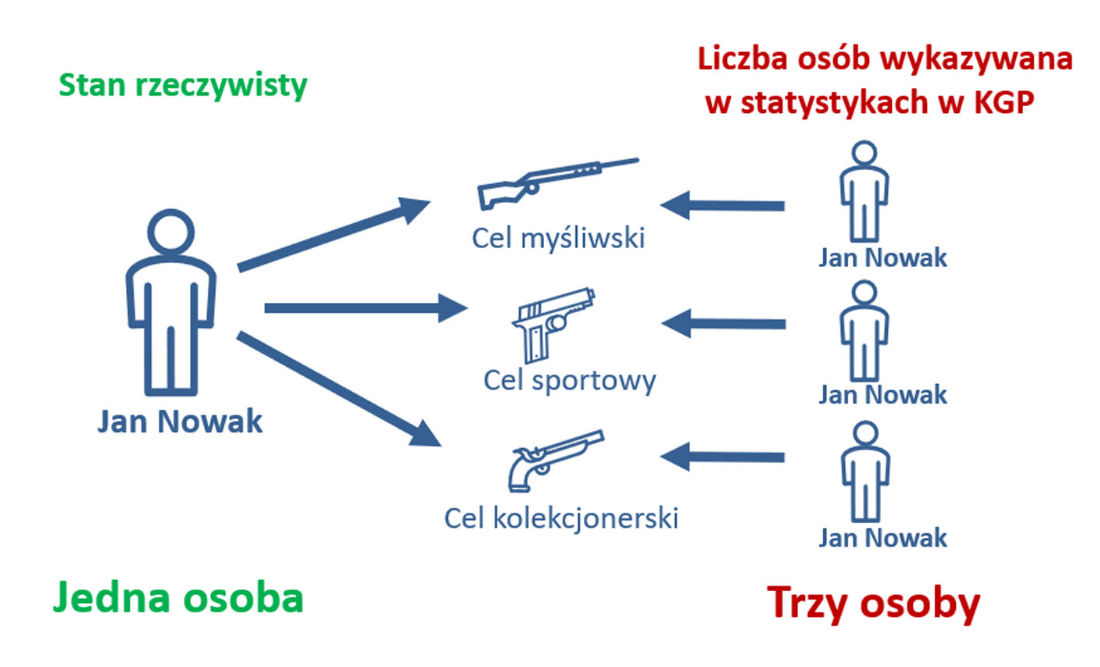 Source: NIK Report
– A systematic verification of deaths effectively did not exist. Firearms registries still contained individuals born in 1915. NIK revealed that firearms inherited after deceased owners remained unsecured for years, significantly increasing the risk of entering the black market.
– Poland has not fully implemented EU Directive 2021/555. Hunters, sports shooters, and collectors undergo medical and psychological examinations only once—when initially applying for a permit. As a result, individuals over 100 years old remain in the system with indefinite firearms rights. The Audit Office also identified extremely overdue examinations among holders of personal protection permits.
– In three regional police headquarters, firearms were accepted in publicly accessible areas such as corridors and offices that lacked safe unloading devices (bullet traps). This demonstrated a systemic contradiction: authorities demanding strict safety standards from firearm owners were themselves creating safety hazards within police facilities, although these deficiencies were corrected during the audit process.
The most serious examples of errors and incompetence identified by NIK auditors include:
– Failure to secure firearms belonging to deceased individuals for decades.
– Accepting firearms into storage in a manner that endangered public safety.
– Extreme delays in periodic medical and psychological examinations, including cases exceeding three years.
– Issuing firearms permits without meeting statutory requirements, including permits issued without evidence of exceptional threat levels, permits granted without required examinations, and inadequate criminal background checks.
– Significant delays in revoking firearms permits after the loss of eligibility conditions, with delays reaching up to 894 days.
– Serious negligence in supervising domestic violence offenders who possessed firearms.
– Registry errors concerning firearm carry rights, including unauthorized entries granting carry privileges to collectors and memorabilia permit holders.
The evolution of legislation toward a tighter and more comprehensive oversight system appears inevitable. NIK advocates reforms aimed at aligning Poland with European Union requirements and responding to public expectations. An IBRiS poll conducted in September 2025 showed that as many as 92.7% of Poles support the introduction of periodic psychological examinations for firearm owners.
Public Attitudes Toward Firearms Regulations in Poland
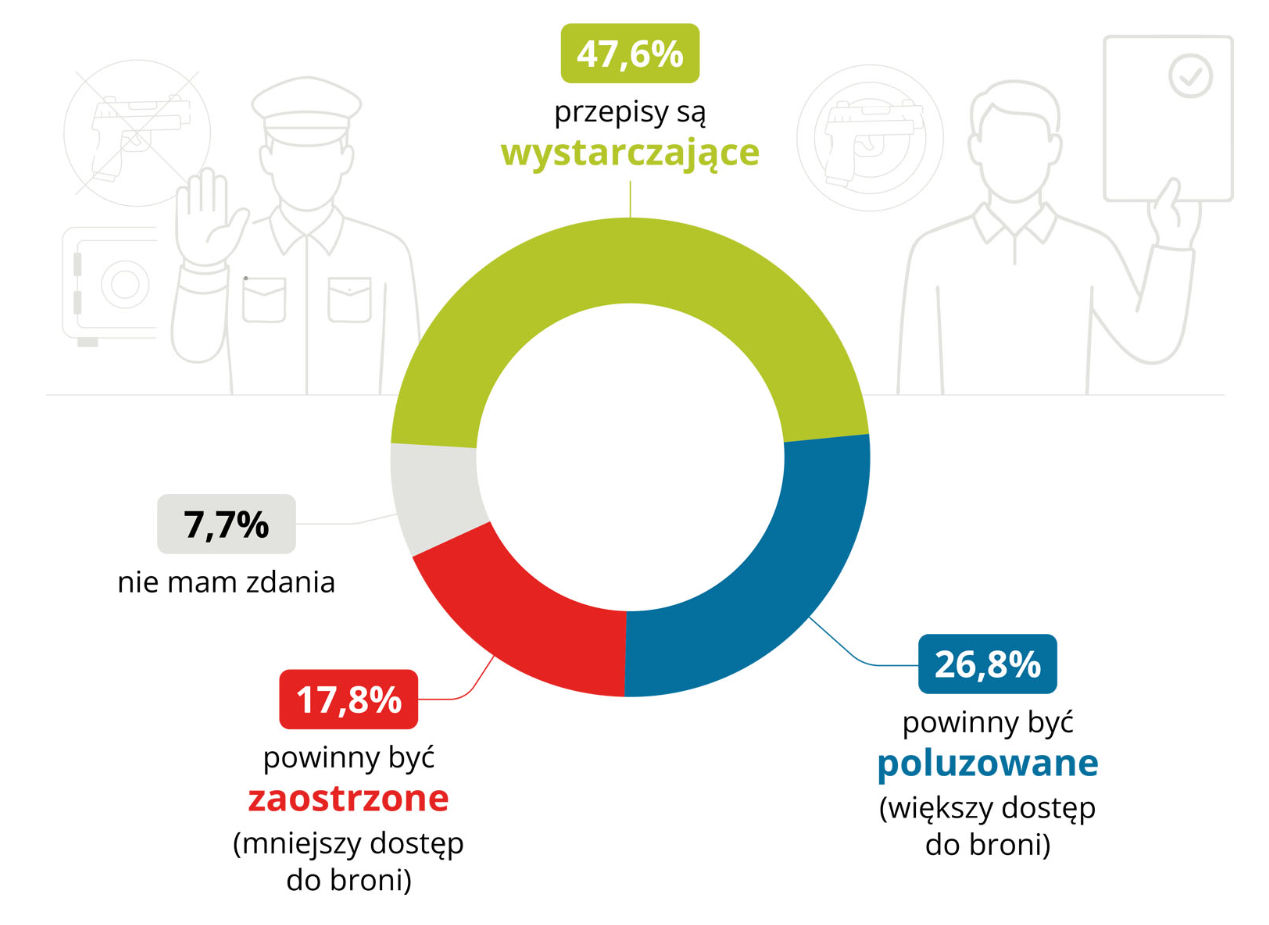
Source: PAP (IBRiS survey conducted on September 19–20, 2025)
Reforms proposed by the Audit Office include:
– Mandatory medical and psychological examinations for all permit categories every five years.
– Registration and oversight of muzzle-loading firearms due to their involvement in 73 criminal offenses, including 28 homicides or attempted homicides in recent years.
– Full integration of the Firearms Registration System (SRB) with the national PESEL database, enabling automatic notification of deaths, as well as migration of historical data from existing police and military databases.
– Granting the Military Police the right to appeal medical certificates, a power they currently lack.
Implementation of NIK's recommendations would effectively end the era of "indefinite privilege" and replace it with a system of "continuously monitored authorization." Particular attention should be paid to 2023, when amendments to Article 10(3)(1) of the Firearms and Ammunition Act, facilitating permit access for certain public service personnel in order to strengthen national defense potential, provided another stimulus for the growth in permit numbers.
If NIK's recommendations are implemented, civilian shooters can expect the following consequences:
– Sports shooters and collectors will need to closely monitor examination deadlines and maintain active club membership. Loss of membership may result in mandatory permit revocation.
– The reintroduction of periodic examinations for hunters is intended to eliminate cases involving individuals whose advanced age may no longer guarantee safe firearm handling.
– The end of anonymity for black powder firearm owners, as such firearms would become subject to administrative oversight and registration.
The NIK report represents a harsh but objective assessment of a system that has struggled to keep pace with the rapidly growing number of armed citizens. Balancing acquired rights against broader public safety concerns, the Audit Office clearly favors stronger oversight mechanisms. It is worth noting that 92.7% of Poles support psychological examinations, viewing them as a key safety measure, regardless of whether they actually provide measurable protection in practice. A transparent and digitized WPA system, built upon reliable SRB data and integrated with the PESEL database, should ultimately benefit firearm owners. Following these reforms, full integration with the mObywatel application may become possible, whereas at present such integration remains technically and legally unfeasible.